October Hunting Season Sous Vide Chart: Exact Times & Temps for Venison Backstrap, Elk & Wild Game
October bow and rifle hunting season is here. Cook lean venison backstrap, tenderloin, elk steaks, and tough neck/shank roasts to buttery perfection with our wild game sous vide chart.
Why Wild Game Meat Needs Precision Temperature Control
Wild whitetail deer, mule deer, and elk possess less than 2% intramuscular fat compared to 8%–12% in grain-fed beef. When cooked over an open grill or hot skillet past 138°F, lean venison muscle fibers contract violently, expelling moisture and concentrating metallic iron compounds that people mistakenly blame as 'gamey' flavor.
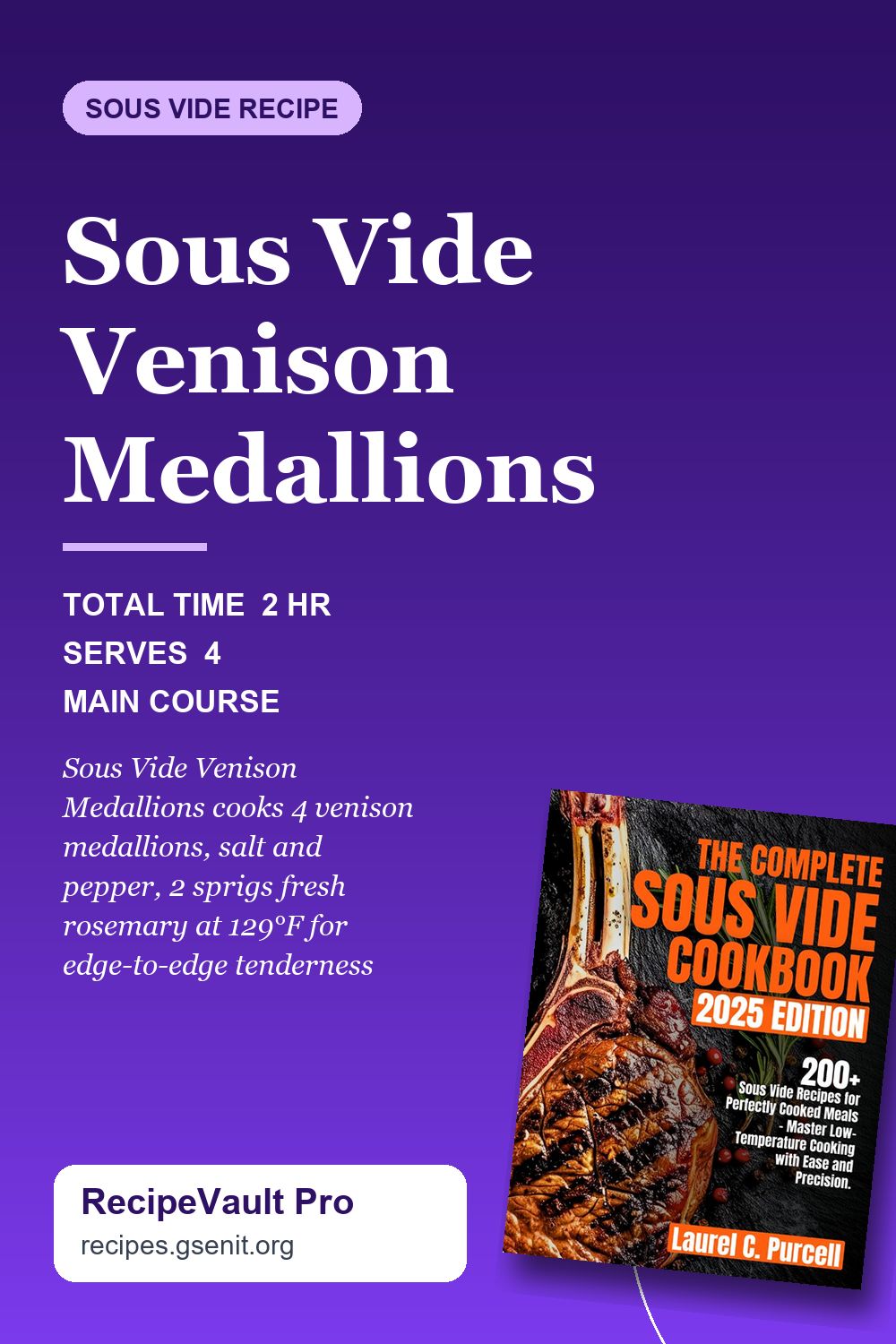
Cooking venison backstrap or tenderloin in a sous vide water bath at 129°F–131°F (54°C–55°C) with a tablespoon of grass-fed beef tallow or butter, crushed juniper berries, and rosemary preserves 95% of its natural moisture and yields a melt-in-your-mouth fillet that rivals prime beef tenderloin.
| Wild Game Cut | Bath Temp (°F) | Cook Time | Safety & Texture Notes | Recommended Pan Sear & Sauce |
|---|---|---|---|---|
| Venison Backstrap / Tenderloin (1.5–2 in) | 130°F (54.4°C) | 2 to 3 hours | Ruby medium-rare; fork-tender & pasteurized | 60-sec butter/rosemary sear + blackberry port jus |
| Elk Sirloin or Rib Chops | 131°F (55.0°C) | 2 to 3.5 hours | Clean, sweet beef-like richness; zero dryness | Cast-iron tallow sear + garlic herb compound butter |
| Venison Hindquarter Roast (Sirloin Tip) | 133°F (56.1°C) | 6 to 8 hours | Softens lean connective tissue without drying | Slice thin against grain for roast sandwiches |
| Venison Neck Roast or Shoulder Blade | 140°F or 165°F | 24 hours | 140°F = sliceable roast · 165°F = shredded barbacoa | Braise with ancho chilies, onion & beef stock |
| Wild Duck or Goose Breast (Skin-On) | 130°F (54.4°C) | 1.5 to 2.5 hours | Score skin first; rosy pink steak-like breast | Cold-pan render skin for 5 min after bath |
- •Trim 100% of White Deer Tallow: Unlike beef fat, whitetail deer fat has a high melting point (110°F+) and waxy tallow compounds that cling to the roof of your mouth—trim all exterior silver skin and white fat, and replace with grass-fed butter or beef tallow in the pan.
- •Pasteurization Hold for Field-Harvested Game: Always cook field-dressed wild game at 130°F or higher for at least 2.5 hours so the core reaches complete pasteurization.
- •Fruit & Juniper Aromatics: Wild game pairs naturally with autumn forest flavors—add crushed juniper berries, fresh thyme, black pepper, and a blackberry or tart cherry balsamic reduction.
Turning Tough Venison Shanks and Neck Roasts Into Gold
Hunters often grind the entire front shoulder and neck into burger meat because those cuts are too sinewy for quick cooking. Instead, season a whole bone-in venison shank (osso buco) or neck roast with salt, garlic, and Mexican oregano, seal with 1/2 cup rich beef bone broth, and cook at 165°F for 24 hours.
Every tendon dissolves into rich gelatin, yielding shreddable October birria tacos or hunter's stew.
- •Freeze Harvested Cuts in Sous Vide Ready Bags: When processing your October deer, vacuum-seal 12-oz backstrap medallions with kosher salt and rosemary right away so they go straight from freezer to water bath all winter.
- •Chill Before Searing Thin Backstraps: Because backstrap cylinders are only 2 inches wide, cool the sealed bag in cold water for 5 minutes before searing so your cast-iron pan doesn't push the center past 131°F.
Tested tools and hardware to achieve the exact temperatures, sear, and results in this guide:
As an Amazon Associate we earn from qualifying purchases at no extra cost to you.
Frequently Asked Questions
What is the best sous vide temperature for venison backstrap?
130°F (54.4°C) for 2 to 3 hours is the gold standard for venison backstrap—it keeps the lean muscle fibers ruby medium-rare and buttery while achieving full pasteurization.
Why does overcooked venison taste gamey or liver-like?
Venison is high in myoglobin and iron. When heated past 145°F, iron oxidizes rapidly and cell moisture evaporates, creating a dry, metallic, liver-like flavor. Keeping the core at 130°F eliminates this completely.
Is sous vide safe for wild boar or bear meat?
For wild omnivores like feral hog/wild boar or black bear (which can carry freeze-resistant Trichinella spiralis strains), cook at a higher temperature of 145°F–150°F for at least 3 to 4 hours for absolute food safety.
Can I drop frozen vacuum-sealed venison directly into the sous vide bath?
Yes, as long as it was sealed in a heat-safe BPA-free vacuum pouch during processing—simply add 45 minutes to the standard cook time.
Recipe by Laurel C. Purcell
Adapted from The Complete Sous Vide Cookbook and edited for American kitchens by the RecipeVault Pro editorial team — US & metric measurements, USDA-safe doneness temperatures, and practical tips. Our editorial policy